Ogham and Gaelic Tattoos: Traditional Irish Writing, Real Meaning, and Why Dublin Still Loves Them
Ogham lines, Gaelic phrases, and ancient Irish symbols carry more than aesthetic value—they hold history, identity, and personal meaning written into the skin.
There are tattoos people get because they look good.
And then there are tattoos people get because they mean something.
Ogham and Gaelic tattoos usually fall into the second category.
Nobody walks into a studio asking for ancient Irish script because they saw it on Pinterest for twelve seconds and thought it looked cute. These tattoos tend to come with family history, cultural identity, grief, pride, or at the very least a very strong need to not end up with badly translated nonsense permanently attached to their ribs.
Fair enough.
At Black Hat Tattoo in Dublin, we see a lot of people looking for Irish script tattoos that actually mean what they think they mean. Ogham tattoos, Gaelic phrases, family names, memorial pieces, old blessings, traditional symbols—these are not trend tattoos. They are personal, and if we’re being honest, they are also very easy to get wrong.
Which is exactly why they deserve more care than most people give them.
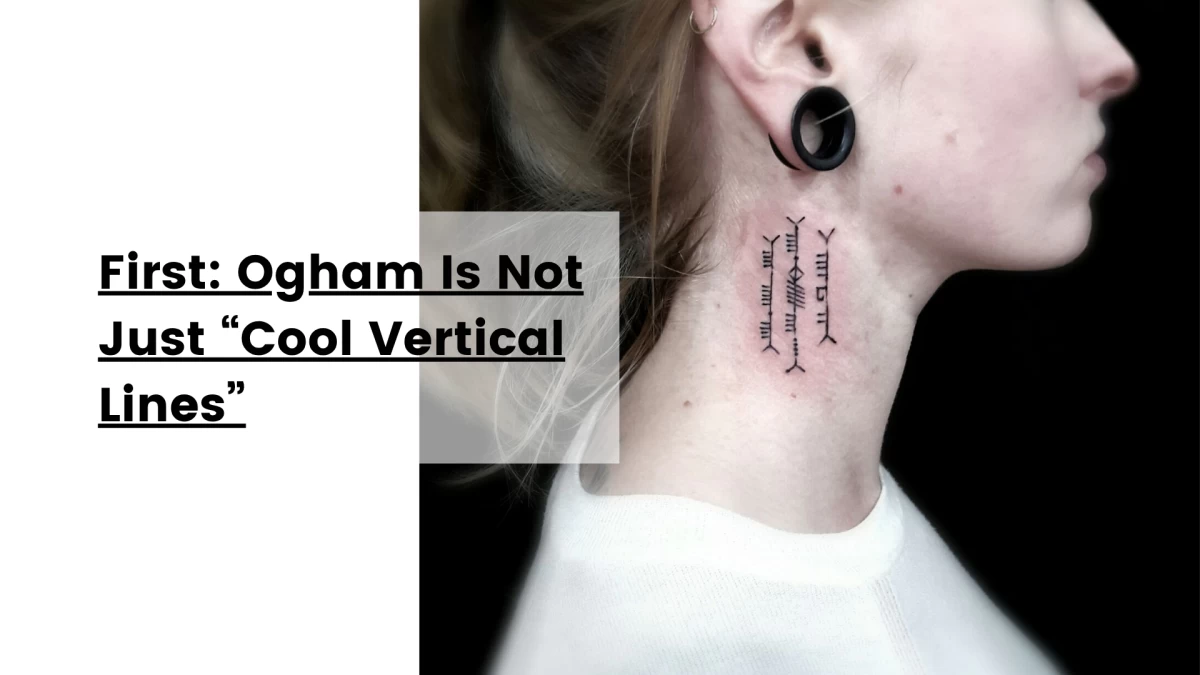
First: Ogham Is Not Just “Cool Vertical Lines”
Let’s start there.
Because yes, Ogham looks beautiful. Minimal, clean, almost abstract. It works incredibly well as a tattoo design.
But it is not decorative geometry someone invented for Instagram.
Ogham is an early medieval Irish alphabet, used primarily between the 4th and 10th centuries. It was traditionally carved into stone, usually along the edge, using lines cut across a central stemline.
Most surviving examples are found on standing stones across Ireland, including around counties like Kerry, Cork, Waterford, and parts of Leinster. Many of these inscriptions were used for names, territorial markers, or memorial purposes.
In tattoo form, Ogham is often used for:
-
Names
-
Family surnames
-
Memorial tattoos
-
Irish words with personal significance
-
Birth names
-
Quiet symbolic pieces that don’t need explanation
It looks simple.
It is not simple.
Because if the translation is wrong, congratulations—you’ve just tattooed administrative chaos in ancient Irish on your body forever.
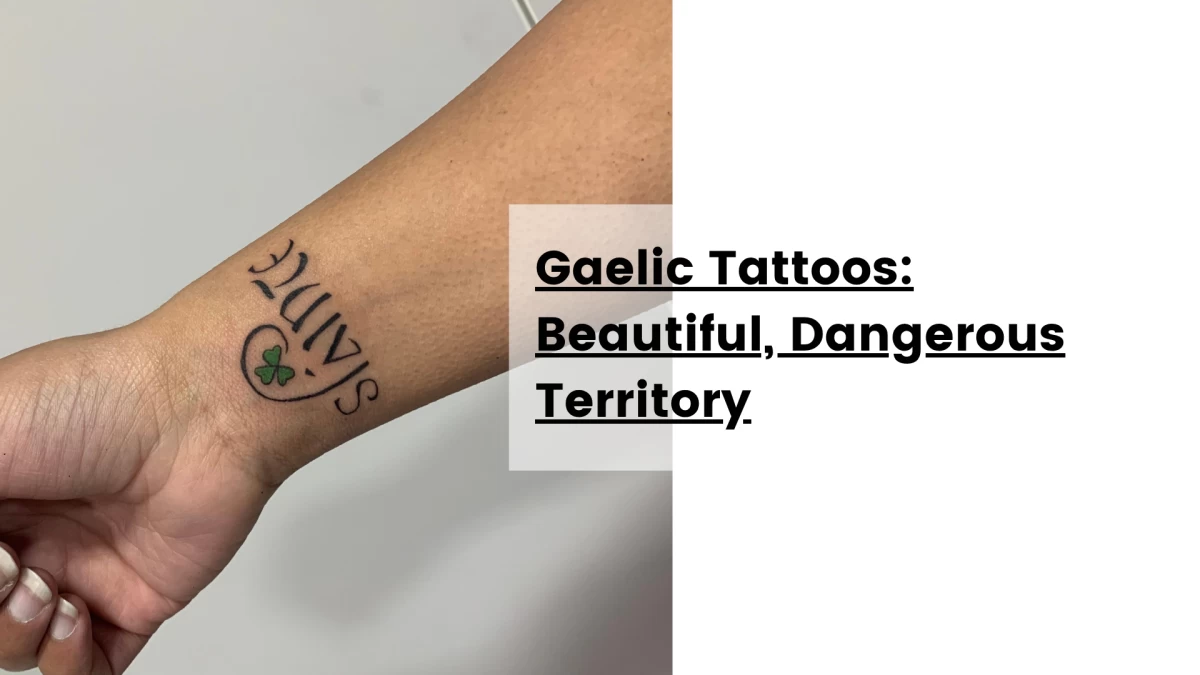
Gaelic Tattoos: Beautiful, Dangerous Territory
Now Gaelic tattoos are a different beast.
Most people say “Gaelic” when they mean Irish language tattoos—phrases written in Gaeilge rather than English.
This could be:
-
Family mottos
-
Traditional blessings
-
Irish sayings
-
Memorial phrases
-
Quotes from literature
-
Religious lines
-
Place names
-
Personal affirmations
The problem?
Irish does not translate neatly word for word from English.
Not even slightly.
This is where people get into trouble.
“Strength and loyalty” sounds straightforward until three different websites give you four different translations and one of them accidentally means “strong dog near cousin.”
Language is rude like that.
So before anyone tattoos Gaeilge on themselves forever: verify it properly.
Not Google Translate. Not your cousin who did one semester abroad. Properly.
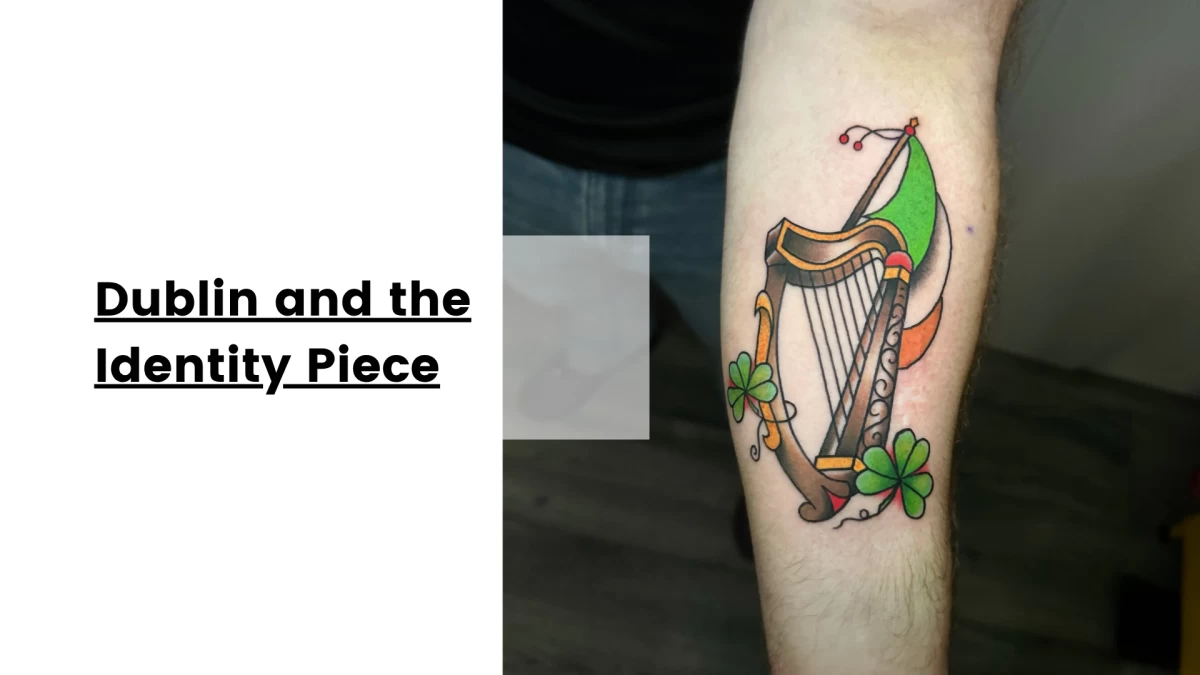
Dublin and the Identity Piece
There is something specific about getting Irish script tattoos in Dublin.
Because Dublin sits in that strange place between deep Irish tradition and modern international chaos. It is historic and global at the same time. You can walk past Georgian architecture, Viking history, tech offices, tourists vomiting outside a pub, and someone getting a sacred Claddagh tattoo all within fifteen minutes.
That mix matters.
For a lot of people in Dublin, Irish identity is complicated. Some grew up speaking Irish. Some didn’t. Some are reconnecting with heritage later in life. Some are Irish-born with international families. Some are not Irish at all but have roots here they want to honour respectfully.
Tattoos become part of that conversation.
They are not always about nationalism. Often they are about belonging.
Sometimes quietly.
Sometimes with full chest-piece commitment.
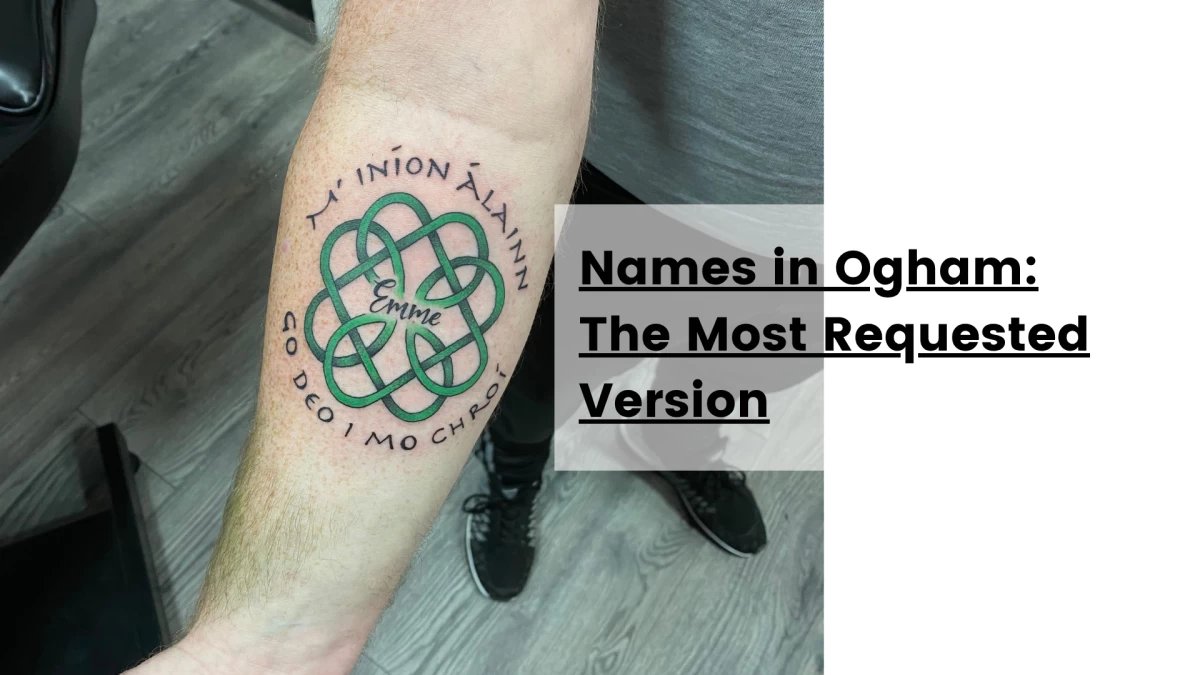
Names in Ogham: The Most Requested Version
By far, one of the most common requests is a name translated into Ogham.
Usually:
A parent A child A partner Someone who passed away A family surname
This works beautifully because Ogham naturally suits names. Historically, that was often its purpose anyway.
But here is the important part:
Not every modern name translates neatly.
Some letters and sounds require adaptation because Ogham predates modern spelling conventions. Direct conversion without understanding the system can create nonsense.
This is why proper design matters.
You are not choosing a font.
You are translating into an old writing system with its own structure.
That deserves accuracy.
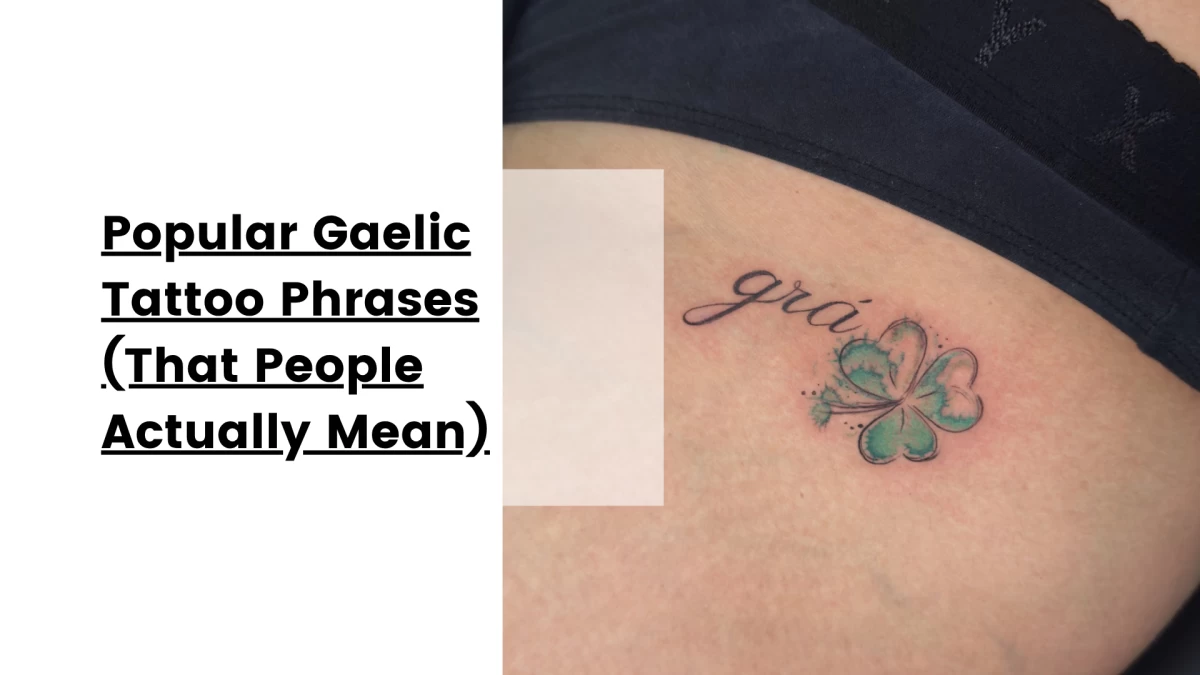
Popular Gaelic Tattoo Phrases (That People Actually Mean)
Some phrases come up repeatedly because they hold emotional weight without feeling forced.
Examples include:
-
Grá — Love
-
Misneach — Courage
-
Neart — Strength
-
Mo Chroí — My heart
-
Sláinte — Health
-
Saoirse — Freedom
-
Fáilte — Welcome
-
Go deo — Forever
-
Anam Cara — Soul friend
These work because they are simple, culturally grounded, and emotionally clear.
What usually works less well is trying to translate your entire life philosophy into seventeen words of highly specific emotional English and expecting ancient Irish elegance to sort it out.
Minimal usually wins.
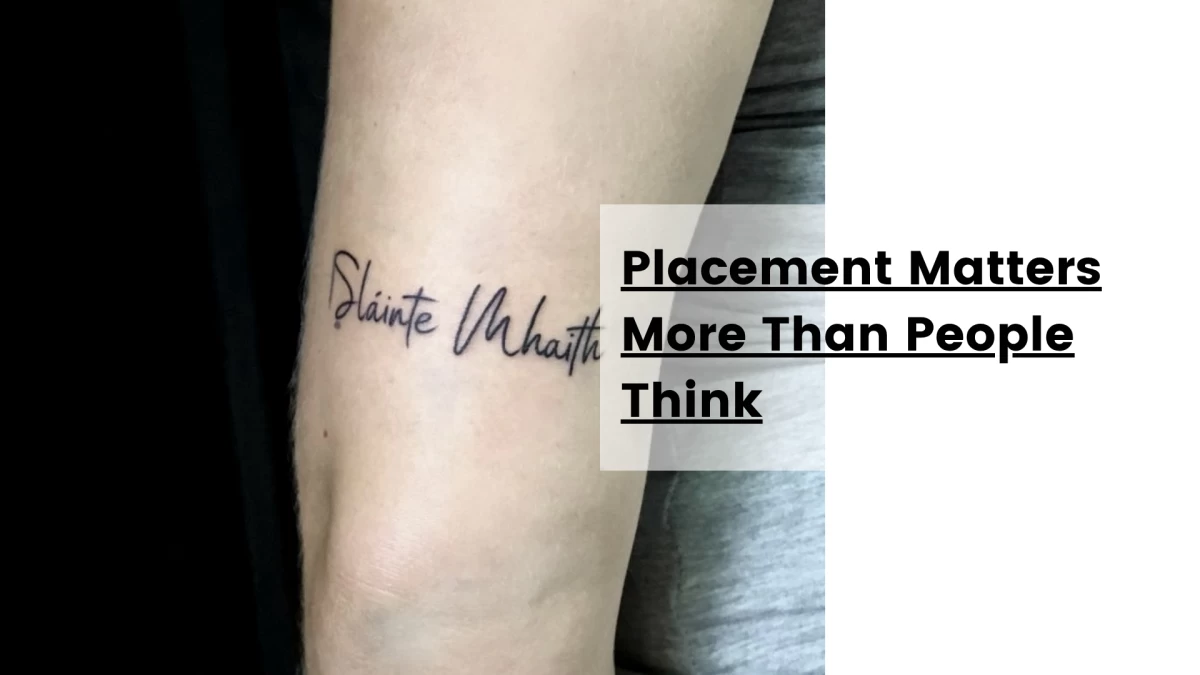
Placement Matters More Than People Think
Ogham especially changes depending on placement.
Because of its vertical structure, it works naturally on:
-
Spine
-
Forearm
-
Ribcage
-
Sternum
-
Calf
-
Behind the ear
-
Side of the wrist
-
Ankle
The shape feels architectural. Clean. Quiet.
Gaelic script is more flexible and often suits:
-
Collarbone
-
Inner forearm
-
Shoulder blade
-
Chest
-
Wrist
-
Along the ribs
Placement changes tone.
A forearm tattoo says one thing.
A rib tattoo says another.
A spine tattoo says you are either deeply symbolic or made several emotionally intense decisions at once.
Possibly both.
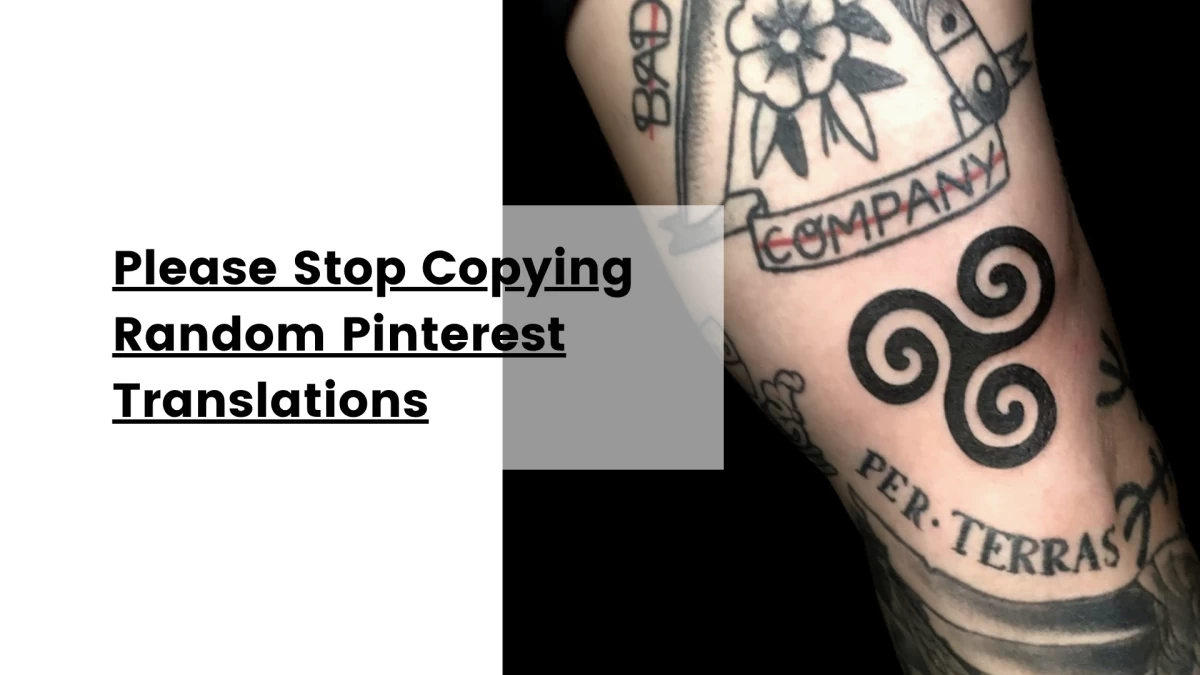
Please Stop Copying Random Pinterest Translations
This needs to be said.
A shocking number of people arrive with screenshots from Pinterest or old Tumblr posts featuring “ancient Irish sayings” that are either mistranslated, misspelled, or entirely invented by someone in Ohio in 2014.
Do not trust aesthetic suffering on the internet.
If the phrase matters, verify it.
Especially with Irish.
Because small grammar changes can completely alter meaning.
And because fixing language tattoos later is deeply annoying and usually expensive.
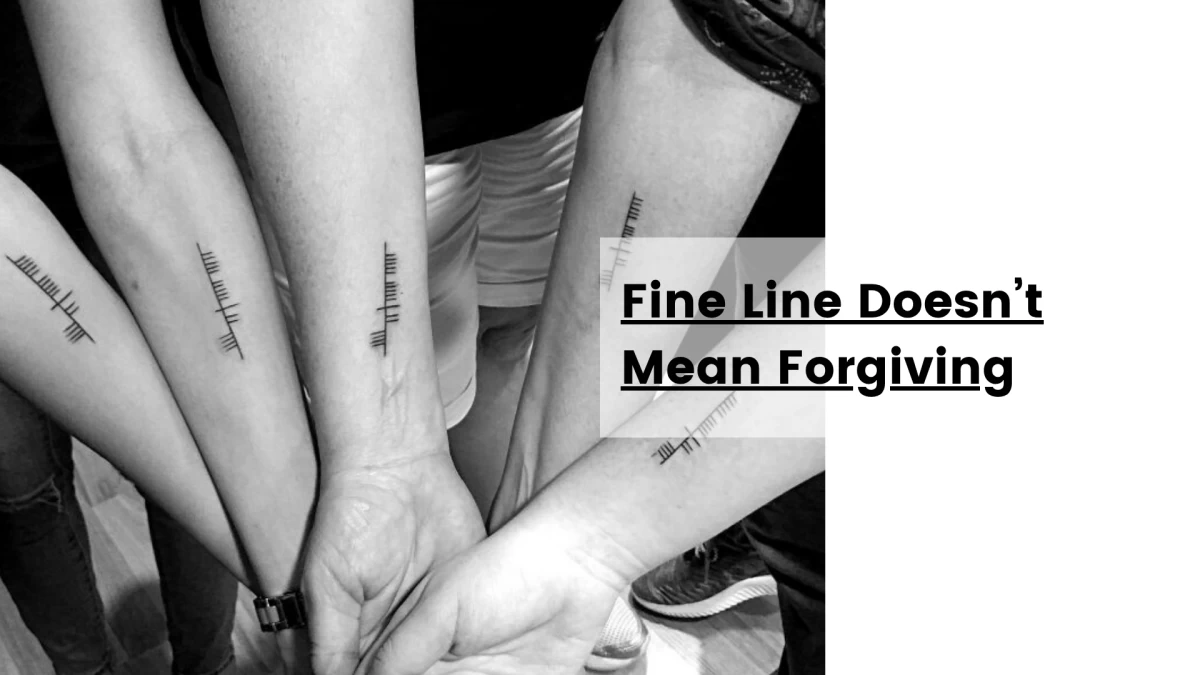
Fine Line Doesn’t Mean Forgiving
A lot of Ogham tattoos look minimal, so people assume they are easy.
No.
Straight lines show mistakes immediately.
Fine line script shows mistakes forever.
These tattoos require precision, spacing, technical restraint, and an artist who understands how small details age over time.
If the lines are too fine, they blur.
If the spacing is poor, readability disappears.
If the translation is wrong, well, spiritually we cannot help you.
Choosing the right artist matters.
Especially when the tattoo carries heritage and not just aesthetics.
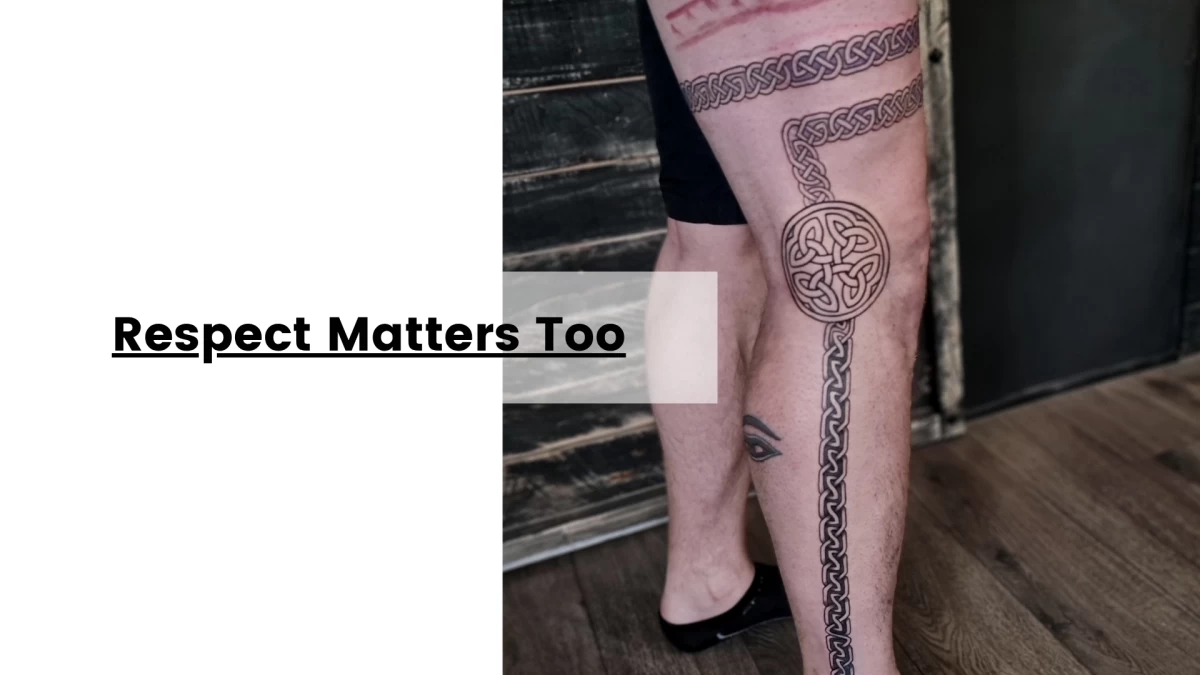
Respect Matters Too
Not every Irish-inspired tattoo is automatically meaningful.
There is a difference between cultural appreciation and decorative tourism.
Most people understand that instinctively.
If you have a genuine connection—family, ancestry, place, language, lived experience—it usually shows.
If you just want “something Celtic-looking” because it feels mystical near festival season, maybe pause and think slightly harder.
Irish symbols deserve better than becoming vague boho wallpaper.
Intent matters.
Final Thought
Ogham and Gaelic tattoos are some of the most beautiful tattoos you can get—not because they are visually striking, though they are—but because they carry history.
Language holds memory.
Writing holds identity.
And tattoos let both stay with you.
At Black Hat Tattoo in Dublin, we approach Irish script tattoos the same way we approach all meaningful work: carefully, honestly, and with enough respect to tell you when something needs fixing before it becomes permanent.
Because “it looked right on Pinterest” is not a reliable tattoo strategy.
And ancient Irish deserves better than that.

Hélène


This might interest you
Here’s a selection of related posts